


Casa Grande Ruins National Monument
Casa Grande Ruins National Monument stands as Arizona's most mysterious prehistoric landmark, preserving the remarkable Great House built by the Ancestral Sonoran Desert People over 700 years ago. Located in Coolidge, Arizona, this national treasure offers visitors an unforgettable journey into ancient Southwestern culture while providing modern accessibility and educational experiences year-round
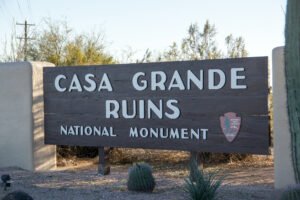
What Is Casa Grande Ruins National Monument?
Casa Grande Ruins National Monument protects America's first prehistoric and cultural preserve, established in 1892 by President Benjamin Harrison. The monument encompasses 472 acres of Sonoran Desert landscape, featuring the iconic four-story Great House that remains one of North America's largest prehistoric structures.
The Ancestral Sonoran Desert People (archaeologically known as the Hohokam culture) constructed this architectural marvel during the Classic Period (1150-1450 CE), using advanced building techniques and astronomical alignments that continue to puzzle archaeologists today. Casa Grande Ruins National Monument serves as a testament to the sophisticated engineering capabilities of these ancient desert inhabitants.
History and Cultural Significance of Casa Grande Ruins National Monument
Ancient Ancestral Sonoran Desert People Civilization
The history of Casa Grande Ruins National Monument begins with the Ancestral Sonoran Desert People, an archaeological culture sometimes referred to as Hohokam, whose name means “Those Who Have Gone” in the O'odham (Pima) language. These skilled agriculturalists thrived in the Sonoran Desert for over 1,000 years, developing sophisticated irrigation systems and trade networks that extended throughout the Southwest.
Archaeological evidence at Casa Grande Ruins National Monument indicates the Great House was constructed around 1350 CE during the height of this culture. This remarkable structure served multiple purposes including:
- Astronomical observatory with wall openings aligned to celestial events
- Community meeting place for religious and social gatherings
- Administrative center overseeing regional trade and agriculture
- Landmark and navigation point visible for miles across the desert
European Discovery and Protection
Casa Grande Ruins National Monument entered recorded history in 1694 when Jesuit missionary Father Eusebio Francisco Kino became the first European to document the mysterious structure. His writings described the ruins as already ancient, sparking centuries of speculation about their original purpose.
Subsequent visitors to Casa Grande Ruins National Monument included:
| Year | Visitor | Significance |
|---|---|---|
| 1775 | Lt. Col. Juan Bautista de Anza | Military reconnaissance expedition |
| 1846 | Brig. Gen. Stephen Watts Kearny | U.S. Army survey during Mexican-American War |
| 1887 | Adolph Bandelier | First systematic archaeological documentation |
| 1906-1908 | Jesse Walter Fewkes | Extensive excavation and mural documentation |
Growing concerns about vandalism and artifact theft prompted protective action. President Benjamin Harrison established the Casa Grande Reservation on June 22, 1892, making Casa Grande Ruins National Monument the first prehistoric and cultural preserve in the United States. President Woodrow Wilson later redesignated it as Casa Grande Ruins National Monument on August 3, 1918.
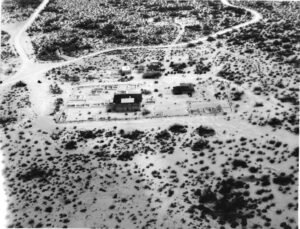
Image Credit:<National Archives and Records Administration, Public domain, via Wikimedia Commons
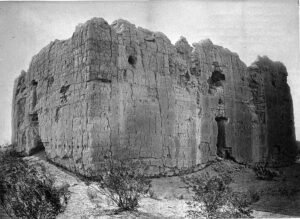
Image source:National Forest Service, Public domain, via Wikimedia Commons
The Mysterious Great House Architecture
The Great House at Casa Grande Ruins National Monument represents the pinnacle of Ancestral Sonoran Desert People's architectural achievement. This four-story structure demonstrates remarkable engineering sophistication for its time period:
- First Story: Completely filled with compacted earth and caliche to support upper levels
- Second Story: Featured multiple rooms with doorways and windows
- Third Story: Contained living spaces with evidence of daily activities
- Fourth Story: Single central room with astronomical viewing openings
The building materials used at Casa Grande Ruins National Monument consist primarily of caliche, a naturally occurring concrete-like substance formed from desert minerals and calcium carbonate. This innovative construction technique allowed the structure to survive over 600 years of desert weathering while maintaining structural integrity.
Astronomical Alignments and Purposes
One of the most fascinating aspects of Casa Grande Ruins National Monument is the Great House's precise astronomical alignments. Openings in the walls align with:
- Summer solstice sunrise (June 21st)
- Winter solstice sunset (December 21st)
- Lunar standstill positions (18.6-year cycle)
- Equinox sun positions (March and September)
These alignments suggest Casa Grande Ruins National Monument served as a sophisticated calendrical system, helping Ancestral Sonoran Desert People farmers track planting and harvesting seasons while maintaining ceremonial and religious observances.
Construction Techniques and Materials
The builders of Casa Grande Ruins National Monument employed advanced construction methods including:
- Rammed earth walls using layered caliche construction
- Wooden beam framework supporting upper stories
- Stone foundation providing stable base on desert floor
- Plaster coating protecting walls from weathering
- Drainage systems preventing water damage during monsoons
Archaeological studies have revealed that the caliche walls at Casa Grande Ruins National Monument contain a sophisticated mix of local materials optimized for desert conditions.
Planning Your Visit to Casa Grande Ruins National Monument
Location and Access Information
Casa Grande Ruins National Monument is conveniently located in Coolidge, Arizona, approximately:
- 60 miles southeast of Phoenix
- 70 miles northwest of Tucson
- 1 mile north of downtown Coolidge
- Just off Highway 87 for easy highway access
Physical Address: 1100 W Ruins Dr, Coolidge, AZ 85128
Hours and Admission
| Information | Details |
|---|---|
| Operating Hours | 9:00 AM – 4:00 PM daily (gate closes 15 minutes before closing) |
| Seasonal Closures | Visitor center closed Sundays and Mondays from July 6 through September 22, 2025 |
| Closed | Juneteenth (June 19), Independence Day (July 4), Thanksgiving Day, December 25th (Christmas Day) |
| Admission | Free for all visitors |
| Interagency Pass | Accepted (America the Beautiful passes such as Senior, Access, Military; no passes sold on-site) |
| Children | Free admission |
Best Times to Visit Casa Grande Ruins National Monument
Arizona's desert climate requires strategic timing for optimal visiting conditions:
- Winter Months (November-March): Comfortable daytime temperatures (65-75°F). Ideal for extended outdoor exploration. Peak tourist season with larger crowds.
- Spring/Fall (April-May, September-October): Pleasant morning temperatures. Fewer crowds than winter months. Excellent photography lighting conditions.
- Summer Months (June-August): Very hot daytime temperatures (100°F+). Early morning visits strongly recommended. Bring plenty of water and sun protection.
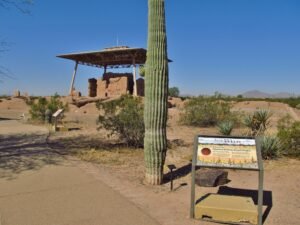
Visitor Experience and Facilities
Casa Grande Ruins National Monument features an accessible short paved loop trail that provides comprehensive views of the Great House and surrounding compound ruins. The trail includes:
- Fully paved walkway suitable for wheelchairs and strollers
- Interpretive signs explaining Ancestral Sonoran Desert People culture and construction techniques
- Multiple viewing angles of the Great House structure
- Shade ramadas providing rest areas during hot weather
- Benches positioned at optimal photography locations
Visitor Center and Museum
The visitor center at Casa Grande Ruins National Monument offers essential context for understanding the site's significance:
Museum Exhibits:
- Original Ancestral Sonoran Desert People artifacts including pottery, tools, and jewelry
- Interactive displays explaining desert agriculture techniques
- Scale model showing the Great House's original appearance
- Regional maps illustrating trade networks
Educational Resources:
- Introductory video (about 20 minutes) about Ancestral Sonoran Desert People culture
- Junior Ranger program materials for children
- Detailed site brochures in multiple languages
- Gift shop featuring books and local crafts
Accessibility Features
Casa Grande Ruins National Monument provides comprehensive accessibility accommodations:
| Feature | Description |
|---|---|
| Parking | Designated accessible spaces near visitor center |
| Walkways | Fully paved trails with minimal grade changes |
| Restrooms | ADA-compliant facilities with accessible features |
| Water Fountains | Wheelchair-accessible height and design |
| Seating Areas | Multiple benches along the trail route |
| Visual Aids | Large-print interpretive materials available |
Ancestral Sonoran Desert People Culture and Daily Life
Agricultural Innovation in the Desert
The Ancestral Sonoran Desert People who built Casa Grande Ruins National Monument were master agriculturalists who transformed the Sonoran Desert into productive farmland. Their innovations included:
Irrigation Systems:
- Canal networks extending over 500 miles throughout the Salt River Valley
- Sophisticated water management preventing flooding and drought
- Community cooperation for system maintenance and operation
- Integration with Casa Grande Ruins National Monument's astronomical calendar
Crop Production:
- Corn, beans, and squash (the “Three Sisters” crops)
- Cotton for textiles and trade goods
- Agave and desert plants for food and materials
- Seasonal wild plant gathering coordinated with farming
Artistic and Cultural Achievements
Casa Grande Ruins National Monument preserves evidence of sophisticated Ancestral Sonoran Desert People artistic traditions:
- Mural Paintings: Archaeologist Jesse Walter Fewkes documented rare wall murals at Casa Grande Ruins National Monument in 1906-1908, featuring four-color designs common throughout Southwestern cultures.
- Pottery Production: Ceramics featured distinctive red-on-buff designs with geometric patterns and animal motifs.
- Shell Jewelry: Extensive trade networks brought Pacific Coast shells to Casa Grande Ruins National Monument, where artisans created intricate ornaments and ceremonial objects.
- Textile Work: Cotton cultivation supported sophisticated weaving traditions producing both utilitarian and ceremonial textiles.
Social Organization and Trade
Casa Grande Ruins National Monument served as a focal point for complex social and economic networks:
- Regional Authority: The Great House likely housed community leaders overseeing multiple villages
- Trade Networks: Archaeological evidence shows connections from California to Mexico
- Ceremonial Functions: Large plaza areas hosted religious and social gatherings
- Resource Management: Coordinated irrigation and agricultural systems across the region
Archaeological Research and Conservation
Ongoing Scientific Studies
Casa Grande Ruins National Monument continues to yield important archaeological insights through modern research techniques:
- Material Analysis: Recent studies have examined the caliche construction materials to understand building techniques and preservation methods.
- Seismic Assessment: Engineers regularly evaluate the Great House's structural integrity to ensure long-term preservation.
- Ground-Penetrating Radar: Non-invasive technology reveals additional structures and features around Casa Grande Ruins National Monument without excavation.
- Environmental Monitoring: Climate and weather data help researchers understand preservation challenges and develop protection strategies.
Conservation Challenges and Solutions
Preserving Casa Grande Ruins National Monument requires addressing multiple environmental and structural challenges:
| Challenge | Conservation Solution |
|---|---|
| Desert Weather | Protective shelter and drainage systems |
| Structural Stability | Regular monitoring and minimal intervention |
| Visitor Impact | Controlled access and protective barriers |
| Wildlife Interaction | Bird deterrents and nest management |
| Plant Growth | Careful vegetation removal from structures |
The Shelter
The distinctive ramada protecting the Great House at Casa Grande Ruins National Monument was completed in 1932 with a steel shelter roof, replacing an earlier corrugated iron structure from 1903. This innovative shelter has become an iconic feature of the site, providing essential protection while maintaining visual access to the ruins.
Photography and Wildlife at Casa Grande Ruins National Monument
Photography Opportunities
Casa Grande Ruins National Monument offers exceptional photography subjects for various interests:
Architectural Photography:
- Great House structure from multiple angles
- Detail shots of caliche construction techniques
- Protective shelter's distinctive design elements
- Surrounding compound walls and foundations
Landscape Photography:
- Desert sunrise/sunset with ruins silhouetted
- Seasonal wildflower displays (spring months)
- Storm photography during monsoon season
- Star photography (dark sky conditions)
Wildlife Photography:
- Desert birds including roadrunners and quail
- Reptiles and small mammals
- Insect macro photography opportunities
- Plant life adaptations to desert conditions
Wildlife and Ecosystem
The Sonoran Desert ecosystem surrounding Casa Grande Ruins National Monument supports diverse flora and fauna, though it may appear barren at first glance. With water, the desert transforms, revealing its vitality:
Common Wildlife Species:
- Greater roadrunner (Arizona's state bird)
- Gambel's quail families
- Desert cottontail rabbits
- Various lizard species
- Great horned owls (nesting in the shelter structure)
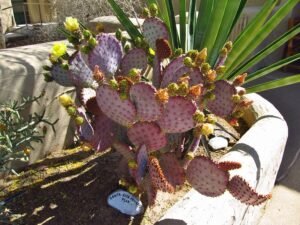
Desert Plant Communities:
- Saguaro cacti and barrel cacti
- Palo verde trees (Arizona state tree)
- Creosote bush and brittlebush
- Seasonal wildflowers and grasses
- Cholla and prickly pear cacti
Educational Programs and Learning Opportunities
Ranger Programs
Casa Grande Ruins National Monument offers various educational programs led by knowledgeable park rangers:
- Guided Tours: Specialized tours provide in-depth information about Ancestral Sonoran Desert People culture, architectural techniques, and archaeological discoveries. Tours available November 11, 2025, through March 14, 2026, at 11 AM and 1 PM (call ahead for confirmation; reservations required for groups of 15+).
- School Programs: Educational visits designed for different grade levels, aligned with Arizona academic standards.
- Evening Programs: Seasonal astronomy programs highlighting the Great House's celestial alignments.
Junior Ranger Program
Children visiting Casa Grande Ruins National Monument can participate in the Junior Ranger program:
- Age-appropriate activity booklets
- Hands-on learning about archaeology and desert ecology
- Official Junior Ranger badge ceremony
- Family-friendly educational activities
Research and Academic Opportunities
Casa Grande Ruins National Monument welcomes researchers and academic institutions:
- Archaeological research permit opportunities
- Student field study programs
- Collaborative research projects with universities
- Scientific publication and data sharing
Nearby Attractions and Trip Planning
Regional Context
Casa Grande Ruins National Monument's location in south-central Arizona provides access to numerous other attractions:
Within 30 Miles:
- Picacho Peak State Park (hiking and spring wildflowers)
- Hohokam Pima National Monument (additional Ancestral Sonoran Desert People sites)
- Casa Grande downtown historic district
- Several authentic Mexican restaurants in Casa Grande
Within 60 Miles:
- Saguaro National Park (Tucson area)
- Arizona-Sonora Desert Museum
- Mission San Xavier del Bac
- Catalina State Park
Trip Planning Suggestions
Half-Day Visit (2-3 hours):
- Visitor center museum and video (45 minutes)
- Self-guided trail walk (45 minutes)
- Photography and reflection time (30-60 minutes)
Full-Day Adventure (combine with nearby attractions):
- Morning at Casa Grande Ruins National Monument
- Lunch in Casa Grande or Coolidge
- Afternoon at Picacho Peak State Park
- Sunset photography session
Weekend Itinerary:
- Day 1: Casa Grande Ruins National Monument + regional exploration
- Day 2: Phoenix or Tucson day trips with desert attractions
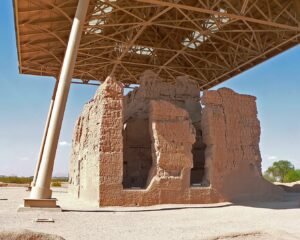
image source: By Greg Hume – Own work, CC BY-SA 3.0, Link
Visitor Tips and Practical Information
Essential Items for Casa Grande Ruins National Monument:
- Plenty of water (especially during summer months)
- Sun protection (hat, sunscreen, sunglasses)
- Comfortable walking shoes with good traction
- Camera or smartphone for photography
- Light jacket (winter mornings can be cool)
Optional Items:
- Binoculars for architectural detail viewing
- Notebook for educational observations
- Portable chair for extended contemplation
- Snacks (no food service on-site)
Visitor Guidelines
Protecting Casa Grande Ruins National Monument:
- Stay on designated trails at all times
- Do not climb on or touch the ancient structures
- Leave all artifacts undisturbed (illegal to remove)
- Respect wildlife by maintaining safe distances
- Pack out all trash to preserve the desert environment
Photography Policies
- Personal photography welcomed and encouraged
- Commercial photography requires advance permits
- Drone usage prohibited without special authorization
- Respectful photography of other visitors
Seasonal Considerations
Spring Visit Advantages:
- Moderate temperatures and longer daylight hours
- Possible wildflower blooms (depends on winter rainfall)
- Less crowded than peak winter season
- Excellent conditions for extended exploration
Summer Visit Preparations:
- Arrive at opening time (9:00 AM) for cooler temperatures
- Bring extra water and electrolyte replacement
- Seek shade frequently and take breaks
- Consider shorter visits during extreme heat periods
FAQ : Casa Grande Ruins National Monument
Q: How long does it take to visit Casa Grande Ruins National Monument?
A: Most visitors spend 1.5-2.5 hours exploring the visitor center, museum, and trail. Photography enthusiasts and history buffs may want to allow 3-4 hours.
Q: Can I go inside the Great House structure?
A: No, visitors cannot enter the Great House itself to protect its structural integrity. The viewing trail provides excellent perspectives from multiple angles.
Q: Is Casa Grande Ruins National Monument suitable for children?
A: Yes, the paved trail and Junior Ranger program make it very family-friendly. The short walking distance is manageable for most children.
Q: Are pets allowed at Casa Grande Ruins National Monument?
A: Pets are permitted on leash in outdoor areas but not inside the visitor center or museum buildings.
Q: What's the difference between Casa Ruins and Casa Grande Ruins?
A: These names refer to the same location – Casa Grande Ruins National Monument is the official name, meaning “Great House” in Spanish, though it's sometimes shortened informally.
Q: Can I have a picnic at Casa Grande Ruins National Monument?
A: Yes, shaded picnic tables are available near the visitor center. No food service is available on-site, so bring your own meals and snacks.
Casa Grande Ruins National Monument stands as one of Arizona's most remarkable archaeological treasures, offering visitors an unparalleled glimpse into the sophisticated Ancestral Sonoran Desert People civilization that thrived in the Sonoran Desert over 700 years ago. The mysterious Great House continues to captivate archaeologists, astronomers, and visitors alike with its impressive scale, innovative construction techniques, and precise celestial alignments that demonstrate the advanced knowledge of its ancient builders.
Whether you're fascinated by prehistoric architecture, interested in Native American history, or simply seeking a unique educational experience in the Arizona desert, Casa Grande Ruins National Monument delivers an unforgettable journey through time. The site's accessibility features, comprehensive museum exhibits, and well-maintained facilities ensure that visitors of all ages and abilities can appreciate this extraordinary testament to human ingenuity and cultural achievement.
Plan your visit to Casa Grande Ruins National Monument today and discover why this ancient wonder has captivated imaginations for over 130 years since its protection as America's first prehistoric preserve. From the moment you approach the towering Great House beneath its protective shelter to your final steps along the interpretive trail, you'll gain a deep appreciation for the remarkable Ancestral Sonoran Desert People who called this desert landscape home and left behind one of the Southwest's most enduring mysteries.
Vermilion Cliffs National Monument (USA)- Stunning Geology