

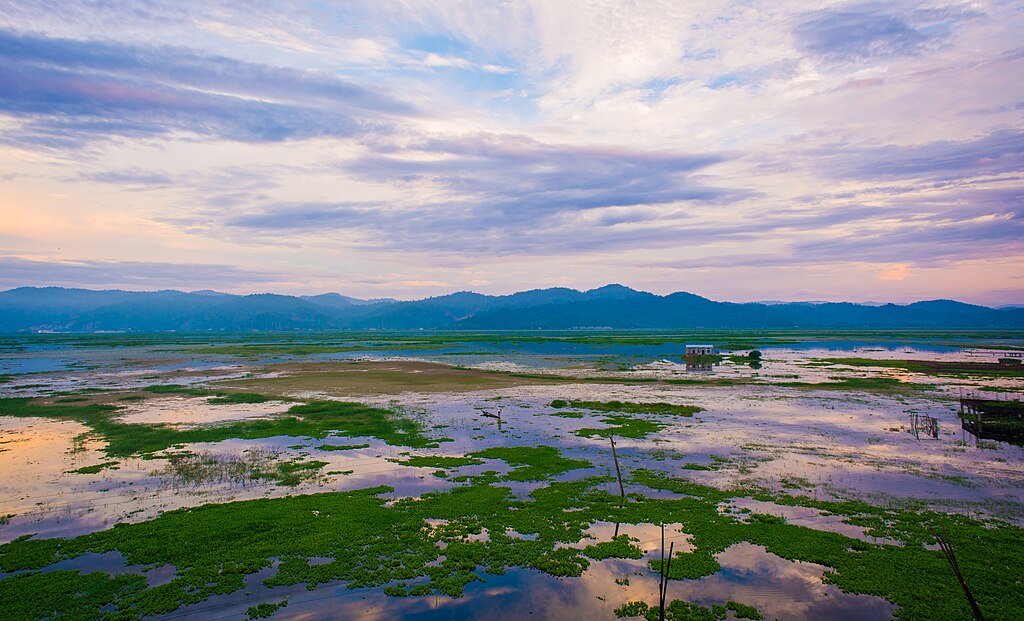
Deepor Beel: A Vital Wetland Ecosystem
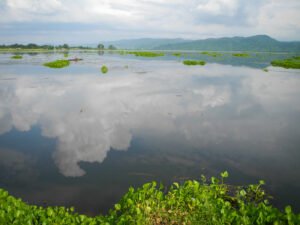
Overview
Deepor Beel, also known as Dipor Bil, is a permanent freshwater lake located southwest of Guwahati city in the Kamrup Metropolitan district of Assam, India. The term “bil” or “beel” translates to “lake” in the local Assamese language. A former channel of the Brahmaputra River, it lies south of the main river. In 1989, the Government of Assam designated 4.1 km² of the area as a wildlife sanctuary.
Recognized for its ecological and biological significance, Deepor Beel was listed as a Ramsar Site under the Ramsar Convention in November 2002 to promote conservation efforts. As one of the largest beels in the Brahmaputra valley of Lower Assam, it is classified as a wetland representative of the Burma monsoon forest biogeographic region.
Access
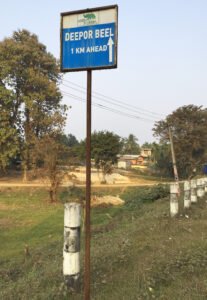
By Renzut – Own work, CC BY-SA 4.0, Link
Deepor Beel is situated approximately 13 km southwest of Guwahati along National Highway 31 (NH-31) on the Jalukbari-Khanapara bypass, which runs along its northwestern boundary. A Public Works Department (PWD) road borders the northern edge of the Rani and Garbhanga Reserve Forests to the south.
The beel is flanked by National Highway 37 to the east and northeast, with the Assam Engineering College Road to the north. Minor roads and paths exist in the vicinity. The beel is about 5 km from Lokpriya Gopinath Bordoloi International Airport (LGBI Airport) in Guwahati, and a broad-gauge railway line skirts its periphery.
Topography and Geology
Nestled in a broad U-shaped valley, Deepor Beel is bordered by steep highlands to the north and south, with the Rani and Garbhanga hills forming a scenic backdrop. The beel and its lowlands are underlain by recent alluvium composed of clay, silt, sand, and pebbles, while the surrounding highlands consist of ancient gneisses and schists from the Archaean period. The region’s geologic and tectonic history influences its hydrology, river channel dynamics, and land use patterns, with the beel considered an abandoned channel of the Brahmaputra River.
Hydrology
The beel is fed by the Basistha and Kalmani rivers and local monsoon runoff from May to September. It is drained by the Khonajan channel, which connects to the Brahmaputra River, 5 km to the north. Acting as a natural stormwater reservoir for Guwahati, the beel holds up to 4 meters of water during the monsoon, reducing to about 1 meter in the dry season.
Its perennial water spread covers approximately 10.1 km², expanding to 40.1 km² during floods. The Deepor Beel Wildlife Sanctuary spans 414 hectares, though a remote sensing study reported a 14.1% reduction in wetland area (to 405 hectares) from 1990 to 2002.
Climate
Temperatures at Deepor Beel range from 10.6°C to 32°C. In winter, when the lake shrinks by about 50%, the surrounding areas (up to 1 km) are used for rice paddy cultivation due to cooler, drier conditions. The tropical monsoon season, from May to September, brings humidity, while pre-monsoon showers occur between March and May.
Flora
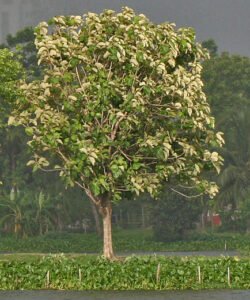
Deepor Beel supports diverse hydrophytic vegetation, categorized by ecological adaptation:
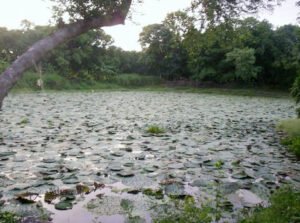
- Aquatic Vegetation: Includes giant water lily (Euryale ferox), water hyacinth (Eichhornia crassipes), water lilies, aquatic grasses, and submerged, emergent, and floating plants, prominent in summer.
- Dry Season Vegetation: Aquatic and semiaquatic plants appear in dry areas during winter.
- Marshy and Open Water Areas: Feature emergent vegetation, water hyacinth patches, mudflats, and net-grasslands.
- Phytoplankton: 18 genera, with Oscillatoria and Microcystis dominant.
Key aquatic plants include Pistia stratiotes, Ottelia alismoides, Lemna minor, Potamogeton crispus, Vallisneria spiralis, Hydrilla verticillata, Ipomoea aquatica, Azolla pinnata, Spirodela polyrhiza, Eleocharis plantaginea, Nymphaea alba, Nymphaea rubra, and Sagittaria sagittifolia. Shoreline vegetation includes Eupatorium adoratum, Achyranthes aspera, Cyperus esculentus, Phragmites karka, Vitex trifolia, and Saccharum spontaneum.
Nearby deciduous forests feature Tectona grandis (teak), Ficus benghalensis, Shorea robusta, and Bombax malabaricum. Commercially valuable aquarium plants, medicinal plants, and orchids are also present.
Avifauna
Deepor Beel is a critical habitat for 219 bird species, including over 70 migratory species. Large congregations of waterfowl, particularly in winter, have recorded up to 19,000 birds in a day. Globally threatened species include the spot-billed pelican (Pelecanus philippensis), lesser adjutant stork (Leptoptilos javanicus), Baer’s pochard (Aythya baeri), Pallas’s sea eagle (Haliaeetus leucoryphus), and greater adjutant stork (Leptoptilos dubius). The Siberian crane (Grus leucogeranus) is a notable migratory visitor. Birdlife International has designated the beel as an Important Bird Area (IBA) due to its avian diversity, though species like the pheasant-tailed jacana have declined recently.

Aquatic and Land Fauna
The beel hosts 20 amphibians, 12 lizards, 18 snakes, and 6 turtle and tortoise species. Over 50 commercially viable fish species from 19 families support local fisheries and nearby wetlands. Land fauna includes wild Asian elephants (Elephas maximus), leopards, jungle cats, barking deer, Chinese porcupines, and sambar.
Community Dependence
The beel sustains approximately 1,200 families across 14 indigenous villages, providing freshwater fish for protein and income, fodder for cattle, aquatic seeds like Euryale ferox, and boro paddy cultivation. A member of the Deepor Beel Fishermen’s Cooperative Society stated, “Our ancestors safeguarded this wetland, and we are dedicated to its protection, as our livelihoods depend on it. We will defend this ecosystem at all costs.” The beel also serves as a waterway for southern villagers to access NH-37.
Visiting Deepor Beel
You can visit Deepor Beel year-round, but winter is the ideal time to explore the lake, as migratory birds flock to the area during this season. Additionally, you’ll have the chance to observe a diverse range of local fish species.
Deterioration Challenges
The beel faces threats from:
- Water hyacinth proliferation.
- Pollution from settlements, roads, industries, and urban wastewater.
- A nearby broad-gauge railway line.
- Government land allocation to private parties.
- Brick kilns, soil cutting, and the Boragaon garbage dump.
- Illegal hunting and intensive fishing.

Restoration and Conservation
A management plan aims to protect the entire beel. Actions include removing 500 hectares of weeds, improving fish catches, and long-term measures like eliminating encroachments, treating urban runoff, halting industrial activities, and promoting ecotourism. The Deepor Beel Bird Sanctuary (414 hectares) protects over 120 bird species, though enforcement against hunting is weak.
Public Participation
The Assam Forest and Fisheries Departments manage the beel, with support from:
- Ramsar Convention: Promotes global wetland conservation.
- Aaranyak: Runs community conservation projects.
- Guwahati University: Conducts ecological research.
- Local environmentalists and researchers advocate for preservation.
Guwahati Waterbodies Bill Act, 2008
This legislation seeks to preserve Deepor-Beel, reduce Guwahati’s waterlogging, and promote eco-friendly development, with a budget of approximately ₹12 crores for projects like water sports.
Deepor Beel stands as a vital ecological and cultural treasure, sustaining biodiversity and local livelihoods while facing significant threats. Concerted conservation efforts, community commitment, and ecotourism initiatives are crucial to preserving this Ramsar Site for future generations.
Ramsar Sites In India: 30 Important Geography MCQ quiz
Chandubi lake – Assam’s Hidden Gem & Eco Tourism